Pick every exercise by what it loads, not by what it is called. Each guide below covers one muscle: what it actually does, where it is strong and weak through its range, which movements load it there, how to set the machine up around your structure, and the order to train them in. All of it is drawn from the J3 University course curriculum.
Each page below is a full exercise selection guide for one muscle, built the same way: anatomy first, because function decides the movement, then the exercises ranked, then the setup that makes them work for your structure.
Every page runs the same method, because the method is what transfers between muscles.
It starts with function. What the muscle does, and which joints it crosses, decides which movements can train it at all. A head that crosses two joints needs to be trained at both, which is why hinging alone never finishes a hamstring and why pushing down alone never finishes a tricep.
Then it looks at where the muscle is strong and weak through its range, and matches that against what the exercise actually loads. That is why a machine lateral raise beats a dumbbell for side delts, and why a glute ham raise does not replace a lying leg curl. The best exercise is the one whose resistance profile matches the muscle's strength profile.
Then it fits the equipment to the person. Humerus length, rib cage size, ankle mobility, how much external rotation you have. The same machine is a good pick for one lifter and the wrong pick for another, and most of what looks like a technique problem is really a setup problem.
Finally it deals with order, because what you train first gets your best output, and what you fatigue first becomes the rate limiter on everything after it.
These guides are written from the J3 University course curriculum, the same material our students train from, rather than assembled from general training advice.
If you want the reasoning in full rather than one muscle at a time, Applied Hypertrophy Optimization covers exercise selection and execution for every body part, and Level 1 covers the foundations underneath it.
For volume and frequency, which every page here references but none of them own, start with how many sets per muscle group per week.
Match the exercise's resistance profile to the muscle's strength profile, then fit the setup to your structure. An exercise that loads a muscle hardest where that muscle is weakest is a poor choice regardless of how popular it is.
No, but the right machine often beats free weights for a specific job, because it can hold resistance where a dumbbell cannot. Where machines are not available, each guide gives the cable or free weight setup that gets closest.
Priority decides order. Whatever you want most goes first, when your output is highest, and anything that would become a rate limiter for a bigger movement goes after it. Each muscle guide covers the specific ordering for that body part.
Applied Hypertrophy Optimization covers exercise selection and execution for every body part in the same detail as these guides, with the reasoning that lets you make your own calls.
Explore Applied Hypertrophy Optimization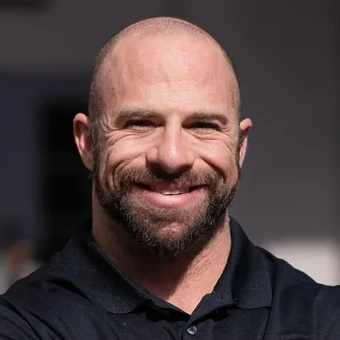
John Jewett is an IFBB Professional bodybuilder and physique coach, and the founder of J3 University. He has spent his career competing at the professional level while coaching competitors and everyday lifters through the same training, nutrition, and recovery principles he uses himself.
J3 University exists to make that process teachable. Every course is built on the reasoning behind the method, not just the method, so you can make better decisions about your own physique long after the program ends. The article above is drawn directly from the J3U course curriculum.